
The Builder's Law
A leader cannot build a better world if he's not determined to constantly aid to its edifice.
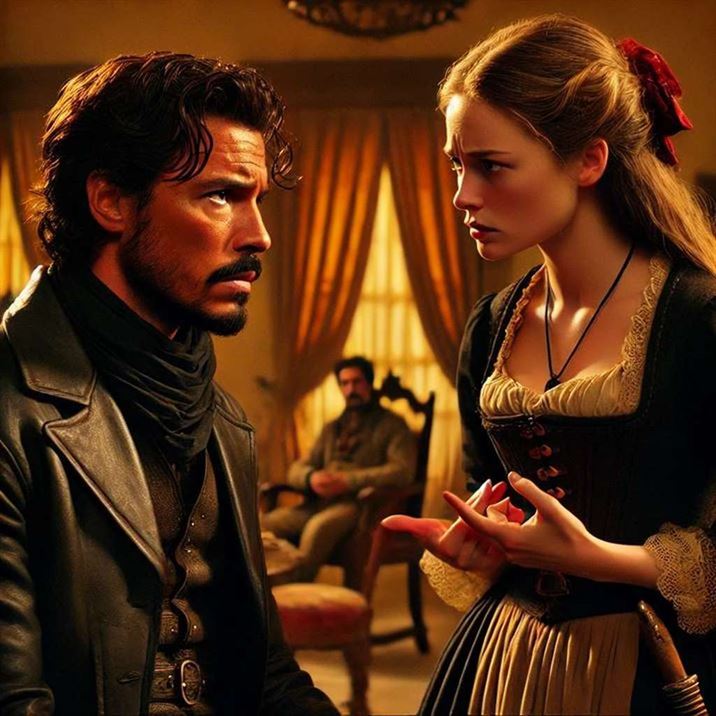
Where there is injustice, lie or disagreement, you will find Zorro. This is the message of the movie "The Legend of Zorro (2005)", a film which you might have watched with the same pleasure as I did.
At a given point, at the beginning of the movie, after he fulfills the mission he alone committed to, that of recovering the box with the votes of the citizens in San Mateo from a gang of villains, Zorro returns to his family.
Signora Elena de la Vega, happy that her husband accomplished his mission, his final mission, as he recently promised, proposes to take their son Joaquin on a trip to Spain and then to New York.
Leadership: Are you able to transform this moment of deep reflection into a landmark of consciousness capable of clarifying the confrontation between the immediate and the horizon of the duty you carry?
Zorro thinks for a while, gives a sigh and, then, he finally says:
- No. The people still need me. It is not yet the time to leave them.
And, as always, as it happens in real life, as well, when the husband makes a promise and doesn't keep it, the disgruntled wife gives him an ultimatum. This time, a very serious one:
- If you go out that door, you won't sleep here for the night. In other words, if Zorro doesn't keep his promise, she will leave him. What eventually happened.
However, at the end of the movie, after both of them go through many endeavors and through many dangers, they get married again, and Elena agrees that every time the people will need Zorro he will go help it. And she is proud of it.
Do you exhibit a heightened sense of belonging to a value framework of devotion, correlated with the freedom of adherence to a higher ideal?
Do you have the determination to constantly fulfill a duty? The most important task of a leader is to manifest his love as a distinct part of the total freedom to belong to a higher ideal, such as: "I go in the way of a common-law action."
Once a leader has a vision, he must also have the power to fulfill it. He cannot build a world without moving, without making an effort, nurturing only nice and clear thoughts. No, he must be involved until the end. The main feature of a real leader is the fact that he has the ability to take his mission to an end.
People had absolute trust in Zorro's help, and he, being fully aware of it, refused to limit his own potential. He could have retired from "activity" for good, he could have started looking for some relief for himself and move to California definitively. And because he was a Don, namely a wealthy man, he wouldn't lack anything.
But what would have come of the people, the town, their hopes? Who would have helped them? Who else would have dared, another Zorro, endanger his life for them, fight for justice and truth with such passion?
In leadership, proof of the existence of a common-law action creates a whole whose result means more than the sum of its component parts.
And this whole is incremented with a segment of emancipation of reason, understood as the ability to dominate tension contexts, upon receiving each form of violation of human dignity.
So, instead of withering uselessly like a plant in the shade, he once again gathered all his energy and devoted himself to a great cause. Like any responsible man, who cannot separate from the real world, he fully gained control over what lied in his subconscious and, passioned by his great goal, namely regaining the people their freedom, he accelerated his own potential, mobilizing himself towards accomplishing the things that were truly important.
And his wife was much happier in the end for having a brave and determined husband, who succeeds in accomplishing great things, worthy of being praised.
How does your importance change when you move from the morality of common sense to the conscious assumption of radical behavior beyond these boundaries?
You can't call yourself a leader if you don't take over whenever it is necessary. He who does nothing but wait and wait, feeling the hours passing by him, dissipates and gets older by the day. On the other hand, he who has an open mind and ambition broils with a childish impatience to fight for an ideal, reason for which he always rushes in the middle of the action.
An important part of the art of leadership requires knowing what you want and constantly dedicating yourself to that.
You can't call yourself a leader if you don't take control with all the strength of your soul and you don't participate in the action whenever you are needed. Or if you are not determined enough to systematically contribute to accomplishing the proposed goal. In order to win other people's acceptance, you must shape the world around you. And if you let everything to fate, especially when people depend on you and rely on your help, you will destroy, you will discard or abandon any relationship you have with them.
The importance of leadership in human life lies in the force of keeping consciousness clean and in supporting a clear idea of how to manage life. These are the two limits that often times alter the mood and the perception of the role you play in the dynamics of personal development, the dynamics of relationships and the dynamics of your own representation on the world stage. Limits that support the shift from the moral knowledge of common sense to that of a radical knowledge.
The builder is the man guided by the satisfaction that springs from the moral obligation of gratitude that he constantly owes the world, through the gesture of unconditionally sharing his own adventure.
Conclusion: You can't build anything on good intentions and ideas, but only involving personally, as often as possible, acting with even more abnegation. You won't build anything and you won't accomplish anything if you hide in the shadow of convenience, waiting for others to eventually do something in your favor, as well.


